Rockets Now Make Up About an Eighth of SpaceX’s Revenue. Here’s What Replaced Them
SpaceX’s Q3 Shows a Rocket Company Becoming an AI Company.
Flight 14: the mission that explains the quarter
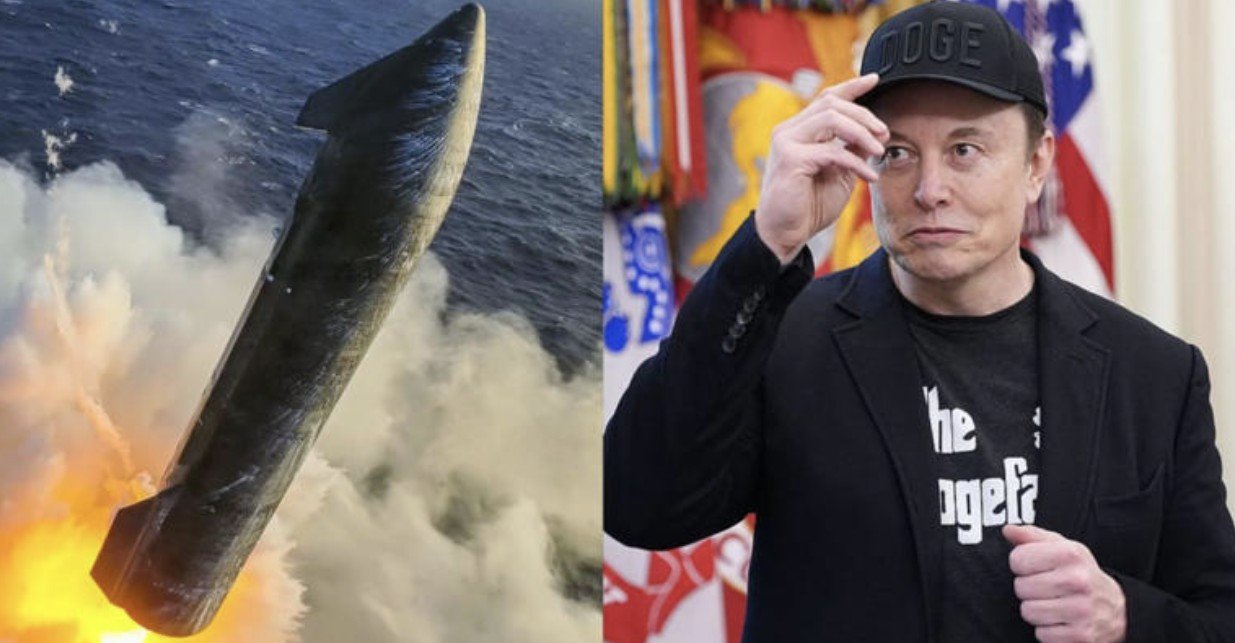
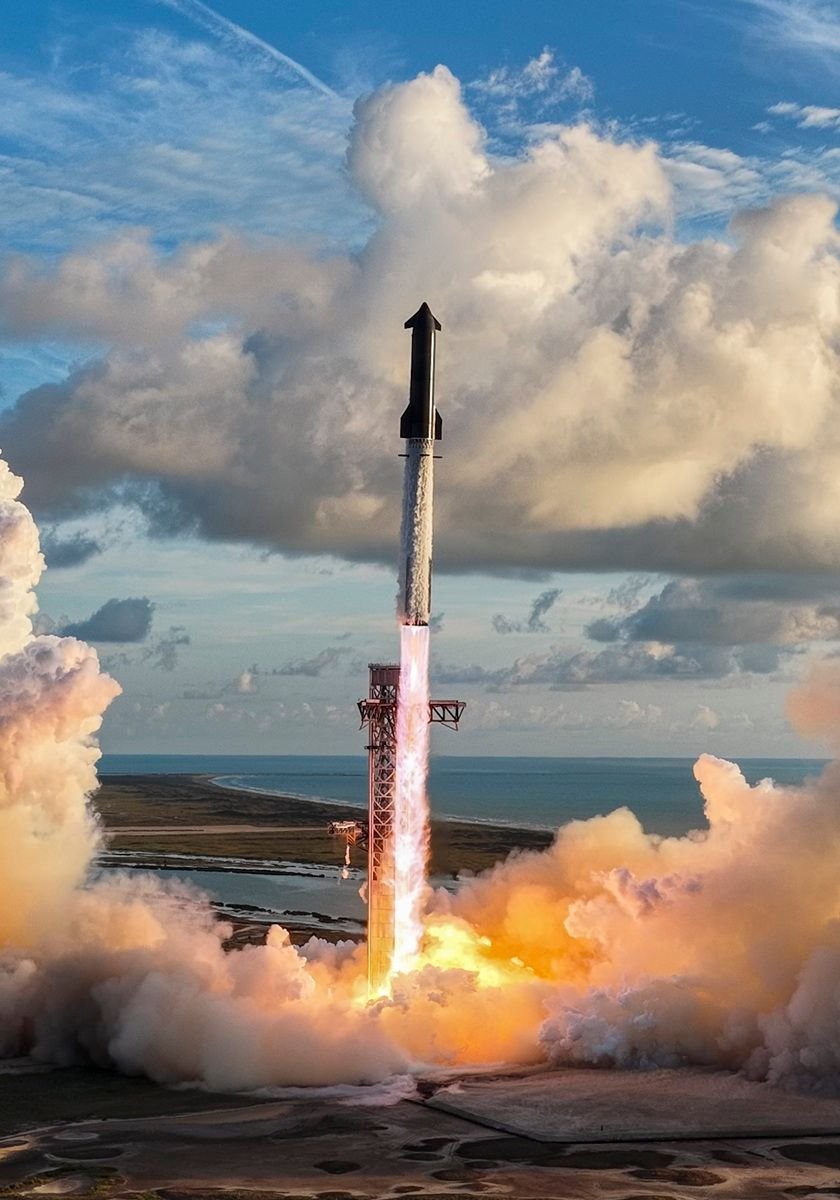
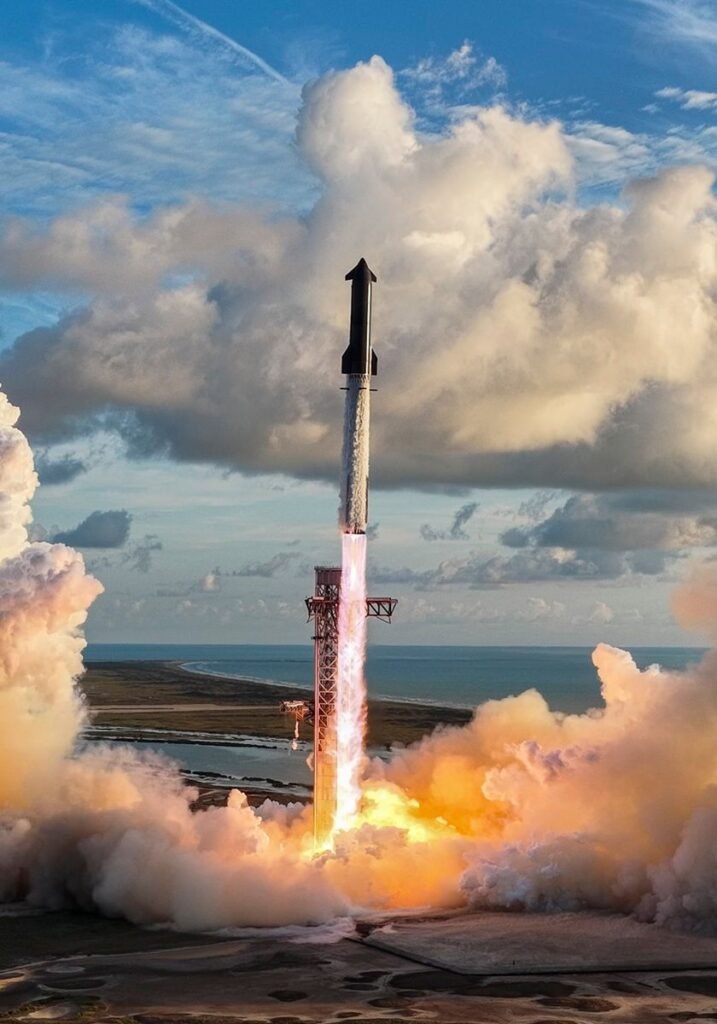
When Starship lifted off from Starbase, Texas, on Flight 14, it did something no Starship had done before: it reached orbit and opened its payload bay for business. The mission was an operational flight that deployed 26 revenue-generating Starlink V3 satellites — the newest generation of SpaceX’s own broadband spacecraft — into working orbit. It was not a test flight.
That distinction is the clearest way to understand the quarter SpaceX just reported. The company’s rockets increasingly exist to serve its own businesses. The launch operation that made SpaceX famous is now the smallest of its three segments — the on-ramp for everything built above it.
The new shape of SpaceX
SpaceX posted third-quarter revenue of $14.6 billion, up 161% from a year earlier. Nearly all of that growth came from the two businesses that live on top of the rockets: connectivity and AI.
The company now reports three segments, each by its official name. Space, the launch business, delivered $1.8 billion in revenue — up 6% year-over-year and 84% from the prior quarter, but now roughly one-eighth of the company’s total. Connectivity, which is mostly Starlink, brought in $5.2 billion. And Super Intelligence (SI), the AI business spanning cloud compute, the Grokbot product, and the newly acquired developer tool Cursor, generated $7.6 billion — the company’s largest and fastest-growing segment.
A year ago, SI produced $813 million in a quarter. Its $6.7 billion year-over-year increase — driven by cloud service agreements, Grokbot, and the Cursor acquisition — is the single biggest reason SpaceX’s revenue more than doubled.
Launch: building the on-ramp
The Space segment may be the smallest slice of revenue, but it is the layer Starlink depends on, and it passed a threshold this quarter.
Flight 14 showed that Starship can deliver operational payloads to orbit at scale. The next step is recovery. Flight 15, expected next month, will attempt to catch both the booster and the ship with the launch tower’s mechanical arms. SpaceX has caught boosters this way before, but the ship — which returns from orbit at far higher speeds — has never been caught. If both stages come back to the tower, it would be the first full recovery of an orbital-class rocket, opening the door to reflying both stages.
From there, the pace is meant to ramp quickly. Management expects a steady stream of flight attempts through the end of this year, accelerating next year: roughly weekly flights in the first half of 2027, then twice weekly by the end of it. Reusability is what makes that schedule economical, and the schedule is what makes Starlink’s next phase — a constellation that could grow toward 100,000 V3 satellites — possible.
The long-term bet behind that cadence is Starbase Louisiana, the planned Gulf Coast spaceport announced in August. It is designed for 20 or more launch towers and, eventually, millions of tons of payload delivered to orbit per year. Construction is still years from producing launches, but the site is the clearest statement of where management thinks the bottleneck is: launch capacity, not demand.
That matters because SpaceX already carries roughly 90% of global mass-to-orbit — the total weight of everything humanity launches into space each year, by Musk’s count on the earnings call. The case for Louisiana is that the constraint on the space economy is not whether rockets can fly, but how many can fly, how often.
Starlink: three businesses, not one
“Starlink” is usually described as one business. The quarter’s results make clear it is three, each with its own customers and economics.
The consumer business is the base of the pyramid: 13.6 million subscribers, up from 12 million the prior quarter — 1.6 million added in three months. It is the part most readers have touched — the dish on a farmhouse, the plan on a boat.
The enterprise and government business grew across both fronts this quarter, and management highlighted it as a key driver of Connectivity’s 69% year-over-year revenue growth. This is Starlink sold as infrastructure: hardened connectivity for companies, agencies, and defense customers who pay for reliability and coverage, not just bandwidth. These are contract businesses, decided in procurement cycles rather than checkout pages.
The aviation business is smaller but strategically distinct. Partner agreements now cover about 12,000 planes, bringing in-flight Wi-Fi to airline fleets. Each signed carrier turns aircraft into another kind of subscriber, and a visible proof point for connectivity that follows the customer anywhere.
Treating these as one “Starlink” obscures the story. The consumer business scales with households; enterprise and government scale with contracts; aviation scales with fleets. They can grow — or stall — independently.
Super Intelligence (SI): the new growth engine
SI’s $6.7 billion year-over-year jump makes it the fastest-growing business in the company, and the capital plan behind it is unlike anything else in SpaceX’s portfolio. The company attributes the increase to three drivers: cloud service agreements, Grokbot, and the Cursor acquisition.
The quarter closed with 1.7 gigawatts of nameplate compute capacity. Nameplate capacity is the rated maximum — what the infrastructure could power at full utilization. A gigawatt is a billion watts, roughly the output of a large power plant, and it measures electrical power, not intelligence. SpaceX’s target is 13 gigawatts of compute online by the end of 2027. Separately, it plans an incremental 20 gigawatts of power and cooling infrastructure next year, so that electricity and heat removal never become the constraint on chip deployment. The company is building the power systems ahead of the chips that will use them.
A 440,000-unit Vera Rubin training cluster is planned by the end of the second quarter of 2027 — what management described as the most powerful training cluster yet. Vera Rubin is Nvidia’s next-generation AI chip platform.
The build-out spans the Memphis and Southaven sites, with roughly 200,000 GB300 chips coming online per month for the rest of this year; next year’s deployments shift primarily to the Vera Rubin platform. To feed it, SpaceX is going deep into the physical layer of the AI economy: the company casts the blades and vanes for its own power turbines, using casting capability originally developed for rocket engines — a capability Musk said can bring power online 12 to 18 months faster than waiting on industrial suppliers. It is also exploring modular inference clusters: units of AI compute manufactured with power and cooling built in, then distributed across the country and potentially the world.
“Inference” is the half of AI that most readers already use. Training teaches a model by running it through enormous datasets; inference is the moment a trained model actually answers a request. Every chat response, code completion, and AI-generated image is inference — and it is the service the modular clusters would deliver.
Grokbot and Cursor: SI at work
The clearest picture of what SI is building for ordinary businesses came from its two newest products.
Grokbot is an “always-on teammate” — an AI agent that works across sales, marketing, IT, and engineering rather than waiting to be asked. Where a chatbot answers a question, an agent runs the errand: it holds context across days, follows schedules, and works across the software a team already uses. Business-to-business is its fastest-growing category. Musk said Grokbot should be in wide deployment for enterprise customers within a few weeks, and that it may end up using most of Super Intelligence’s compute (earnings call). That is Musk’s forecast, not a current compute-usage figure.
The Cursor acquisition supplies the other half: distribution. Cursor, the acquired AI coding tool, brings an enterprise salesforce — a team that already knows how to sell software to big companies — and joins the unified subscription plan SpaceX launched this fall, which bundles Grok, Cursor, and Grokbot into one offering. The number of Grok Enterprise customers — a group that includes Cursor customers — generating more than $1 million in annualized revenue for SpaceX grew 50% from the previous quarter, measured on a pro forma basis: counting Cursor’s pre-acquisition customers as if they had been SpaceX’s all along.
For a business owner, the practical takeaway is that SI is assembling a full stack aimed at work rather than conversation: the compute, the model, the agent, and now the sales channel and subscription that tie them together. The compute targets are still targets, not services on a menu today — but the Grokbot rollout is the near-term development an operator can actually evaluate.
By the Numbers
- Total revenue: $14.6 billion, up 161% year-over-year
- Adjusted EBITDA — a profitability measure that adds back interest, taxes, depreciation, and certain other costs — of $8.8 billion, up 306% from $2.2 billion
- Space revenue: $1.8 billion, up 6% year-over-year and 84% quarter-over-quarter
- Starlink consumer subscribers: 13.6 million
- Aviation: partner agreements covering about 12,000 planes
- Compute: 1.7 gigawatts of nameplate capacity at quarter-end, targeting 13 gigawatts of compute by the end of 2027
What to Watch (SpaceX)
Four things will tell you whether this quarter was a turning point or a peak.
First, the Flight 15 catch attempt. Full recovery of booster and ship is the unlock for cheap, frequent launch. Second, the Grokbot wide rollout — watch whether enterprise adoption follows the early growth. Third, construction progress at Starbase Louisiana, the long-run bet on launch capacity. Fourth, the 13 gigawatt target, which will test whether power infrastructure can keep pace with chip deployment.
The through-line of the quarter is simple: SpaceX is becoming a connectivity and AI company, with rockets as the infrastructure underneath. The next milestones are concrete — a catch attempt that could make Starship reusable, and a Grokbot rollout that will show whether the AI business can grow into the compute being built for it.