The world’s second-largest LNG exporter is losing billions, and the ripple effects are heading for your energy bill.
QatarEnergy has extended its force majeure on liquefied natural gas (LNG) deliveries to Italy’s Edison until the beginning of December, Italian utility Edison confirmed on Monday. The latest extension cancels six additional LNG cargoes, bringing the total number of undelivered shipments to 35 since the disruption began in April (Reuters).
The news sent European benchmark gas futures higher on Monday. The Dutch front-month TTF contract — Europe’s most closely watched gas price — rose about 2.8% to €74.10 per megawatt-hour, recovering part of the previous week’s steep losses (Yahoo Finance). The price jump came as diplomatic efforts to reopen the Strait of Hormuz stalled, with Iran refusing to soften its conditions for allowing maritime traffic through the critical waterway.
What’s Happening on the Ground
The force majeure — a legal clause allowing QatarEnergy to suspend deliveries due to circumstances beyond its control — was first triggered in March after Iranian strikes damaged Qatar’s Ras Laffan LNG export complex during the U.S.-Iran war. The facility has been operating at reduced capacity ever since (Bloomberg).
QatarEnergy has been extending the suspension month by month, and the latest round affects buyers well beyond Italy. Pakistan and Bangladesh were notified that shipment cancellations will continue through November, and at least one Indian buyer received a similar notice (Bloomberg).
For Edison — the Italian subsidiary of France’s EDF and one of QatarEnergy’s largest European customers — the stakes are significant. The two companies have a 25-year supply agreement dating back to 2009, under which QatarEnergy delivers approximately 6.4 billion cubic metres of natural gas per year to Italy, equivalent to roughly 10% of the country’s total gas consumption (Reuters). Edison has so far managed to replace 23 of the missing cargoes, primarily by turning to U.S. suppliers (Reuters).
A 96% Collapse in Exports
The force majeure extension is only part of a much larger story. Six months into the U.S.-Iran war, Qatar’s LNG exports have collapsed by an extraordinary 96% (Reuters).
According to data from intelligence firm ICIS, Qatar shipped only 18 LNG cargoes through the end of August — down from 509 cargoes during the same period a year earlier (Reuters). The de facto closure of the Strait of Hormuz, which normally carries about 20% of the world’s daily LNG supply, has effectively trapped Qatar’s gas exports inside the Persian Gulf (Yahoo Finance).
The financial toll is staggering. Reuters calculations estimate that Qatar has lost approximately $24 billion in gas sales — equivalent to roughly five months of national income based on 2025 data (Reuters).
QatarEnergy reportedly expects the damage to its Ras Laffan complex to cost around $20 billion per year in lost revenue and could take up to five years to fully repair (Yahoo Finance).
QatarEnergy has scrambled to mitigate the damage, purchasing 33 spot LNG cargoes from the United States this year for delivery to customers in South Korea, Taiwan, Bangladesh, India, and Japan (Reuters). Some Qatari and Emirati cargoes have also been moved through creative ship-to-ship transfers conducted outside the Strait of Hormuz, though the volumes remain a fraction of pre-war flows (Reuters).
Why Gas Prices Are Rising Again
European gas futures rose on Monday for a straightforward reason: there is no clear path to reopening the Strait of Hormuz.
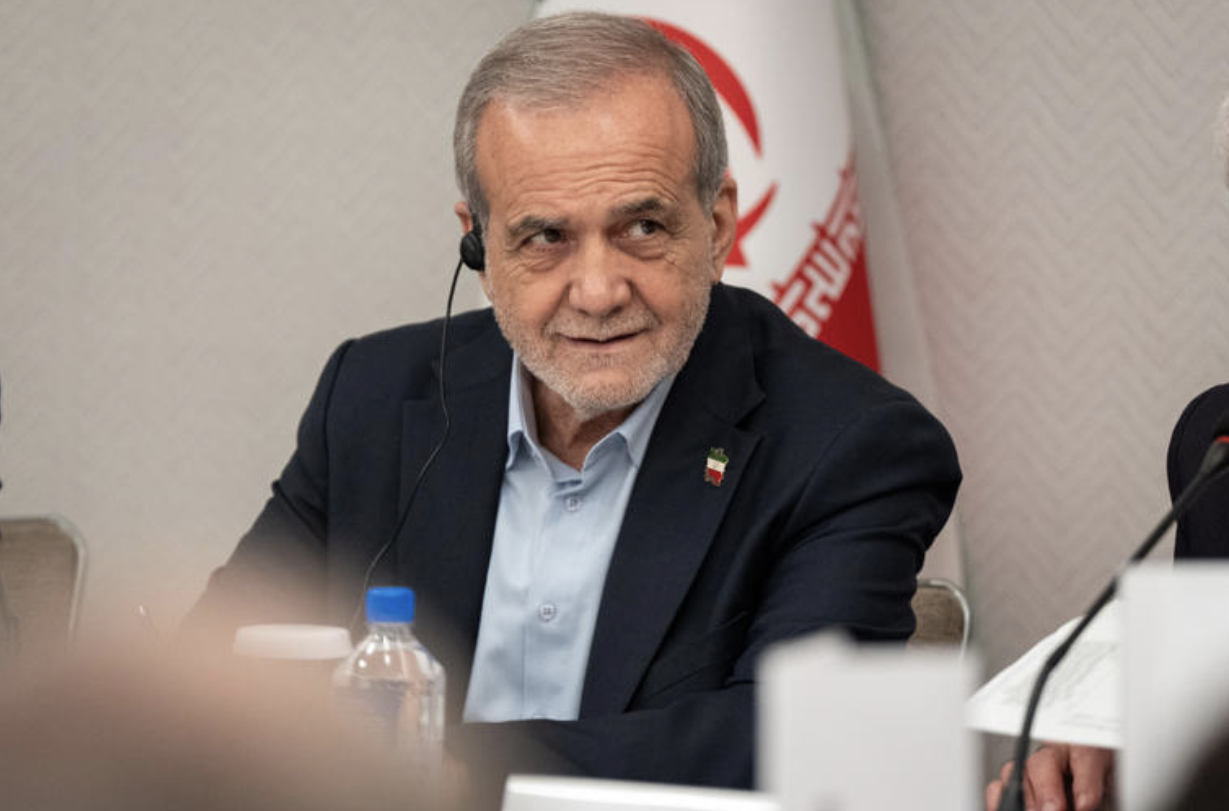
Iranian President Masoud Pezeshkian used his appearance at the United Nations General Assembly last week to outline Tehran’s conditions for any meaningful talks with the United States. He stated that Iran would not allow freedom of navigation through the Strait of Hormuz as long as sanctions and a U.S. blockade remain in place (Briefs Finance). U.S. President Donald Trump publicly rejected an Iranian proposal to reopen the waterway, and Tehran responded by holding firm on its conditions (Yahoo Finance).
The diplomatic impasse has traders worried. European gas storage is currently just over 70% full, well below the typical seasonal level of around 86% for this time of year (Briefs Finance). With the winter heating season approaching, countries including Germany are rushing to fill storage facilities, but the absence of Qatari LNG is making that task harder (Reuters).
Brent crude also surged back above $106 per barrel on the diplomatic stalemate, adding further inflationary pressure across energy markets (Yahoo Finance).
What This Means for Your Wallet
The Qatar LNG crisis may feel distant, but energy prices have a way of working their way through the economy. Here’s what to watch:
Heating bills this winter. European gas storage is running roughly 11 percentage points below last year’s levels (Yahoo Finance). A cold winter could rapidly draw down inventories and trigger another spike in wholesale prices — costs that typically get passed through to households and businesses.
Manufacturing and industrial costs. Natural gas is a key input for industries ranging from fertiliser to chemicals to glassmaking. Prolonged price elevation squeezes margins and can lead to production cuts, which ripple through supply chains.
Competition with Asia for spot LNG. Europe has already been losing the competition with Asia for flexible LNG cargoes because of elevated Asian spot prices and the absence of most Qatari term volumes (Yahoo Finance). The longer Hormuz stays closed, the more expensive it becomes for European buyers to secure replacement cargoes.
Long-term supply uncertainty. QatarEnergy has warned that the Hormuz crisis could delay the world’s largest LNG expansion project, which Qatar is counting on to replace volumes lost after attacks on Ras Laffan (Reuters). Industry executives say global gas markets are pricing in tight supplies well beyond this winter (Reuters).
The Bottom Line
Qatar’s LNG crisis is now in its seventh month with no end in sight. The force majeure extension to December means that Edison — and by extension Italy — will have gone eight straight months without contracted Qatari gas deliveries. The 96% collapse in Qatar’s exports has removed one of the world’s most important gas suppliers from the market, and diplomatic efforts to reopen the Strait of Hormuz remain deadlocked.
For businesses and consumers, the practical takeaway is to budget for elevated energy costs through the winter. The combination of low European storage, absent Qatari supply, and stalled diplomacy creates real upside risk on prices. If you run a business with significant energy exposure — whether that’s manufacturing, transport, or simply a large office to heat — now is the time to review your energy contracts and hedging strategy.
As Anne-Sophie Corbeau of Columbia University’s Center on Global Energy Policy put it at the Energy Trading Week conference in London: “We move constantly between de-escalation and conflict, and that’s something that nobody can actually manage correctly” (Briefs Finance).
In other words, expect volatility — and plan accordingly.