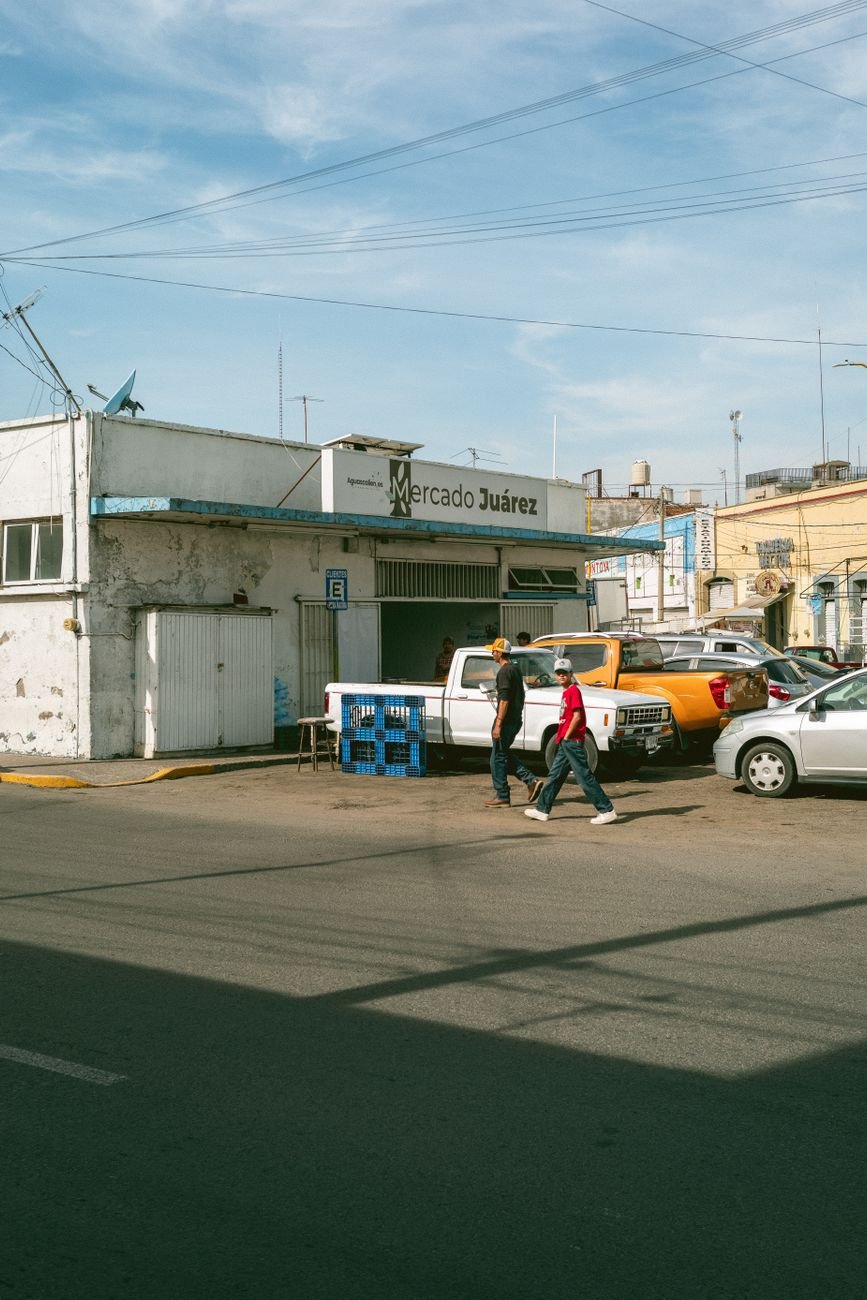
Mexico’s cartels grew through trafficking, corruption, weak policing, and U.S. demand. Here is why military crackdowns have not ended their power.
Mexico’s Cartel Crisis Was Decades in the Making.
Mexico’s drug cartels did not emerge simply because criminals found a profitable trade. They grew out of a century of border commerce, uneven state capacity, political protection networks, and an expanding U.S. market for illicit drugs. Over time, trafficking groups evolved from transport organizations moving marijuana and heroin north into heavily armed, diversified power centers able to shape local economies, policing, elections, and daily life.
The question is not why Mexico has failed to “fix” cartels in a single moment. It is why organizations that exploit cross-border demand, corruption, fragmented institutions, and territorial inequality have proved so adaptable. Mexico has repeatedly arrested or killed cartel leaders, deployed the military, reorganized police forces, and cooperated with U.S. authorities. Yet those actions have often broken large organizations into smaller and more volatile rivals rather than dismantling the systems that make organized crime durable.

Early Foundations
Mexico’s modern trafficking economy developed along a long and commercially active border with the United States. Smuggling networks existed before the contemporary drug war, moving goods across a boundary where legal restrictions, price differences, and uneven enforcement created incentives for illicit trade.
In the early and mid-twentieth century, marijuana and opium-poppy cultivation took root in parts of northwestern Mexico, particularly in rural areas where poverty, weak infrastructure, and geographic isolation limited legal economic opportunities. Trafficking was smaller in scale than it would later become, and it was often embedded in local political arrangements rather than operating as an open challenge to the national state.
For much of the twentieth century, Mexico’s dominant Institutional Revolutionary Party, or PRI, maintained a centralized political system. That system did not eliminate corruption. It often contained it through informal bargains among officials, police commanders, regional political brokers, and illicit operators.
The arrangement varied by region and changed over time. But trafficking networks often operated inside a managed political environment rather than competing openly for territory through sustained public violence. Local officials could be bribed, threatened, or co-opted. In return, trafficking groups could be tolerated so long as they did not become too visible or destabilizing.
This history matters because cartel power did not begin with a sudden collapse of Mexican authority. It developed through longstanding gaps between formal institutions and local realities. In many places, the state was present through elections, schools, public works, and security forces, but it lacked the consistent investigative capacity, judicial independence, and local legitimacy needed to suppress organized crime.
Mid-Century Turning Points
The structure of the drug trade shifted sharply in the 1970s and 1980s. U.S. and Colombian enforcement pressure altered trafficking routes and created new opportunities for Mexican organizations.
As Colombian cocaine producers increasingly needed reliable land routes into the United States, Mexican traffickers became more than transport intermediaries. They gained leverage by moving cocaine across the border and, in some arrangements, receiving a share of the product instead of cash. That change allowed Mexican groups to develop their own wholesale networks, accumulate larger profits, and build independent power.
The Guadalajara Cartel became one of the most important organizations of this era. It connected major traffickers including Miguel Ángel Félix Gallardo, Rafael Caro Quintero, and Ernesto Fonseca Carrillo. Its rise illustrated a model that later groups would refine: control of transport corridors, access to rural production zones, relationships with corrupt officials, and the ability to use violence selectively.
The 1985 kidnapping and murder of U.S. Drug Enforcement Administration agent Enrique “Kiki” Camarena exposed the stakes of that system and intensified bilateral pressure. It also contributed to the fragmentation of the Guadalajara organization. But fragmentation did not end the drug business. It redistributed routes, personnel, contacts, and operational knowledge among successor networks.
By the late twentieth century, the Gulf Cartel had become a major force in northeastern Mexico, particularly along the Tamaulipas border. The Sinaloa Cartel, rooted in northwestern trafficking networks, expanded through a flexible alliance structure that made it more resilient than a single centralized hierarchy.
By 2006, four organizations were widely regarded as dominant in Mexico’s trafficking landscape: the Tijuana or Arellano Félix organization, the Sinaloa Cartel, the Juárez organization, and the Gulf Cartel (Congressional Research Service, Mexico: Organized Crime).
The Zetas emerged from a particularly consequential alliance. Originally formed as an enforcement arm for the Gulf Cartel, the group drew heavily from former members of Mexico’s military Special Air Mobile Force Group. Their military training introduced a more paramilitary criminal model, marked by tactical ambushes, intimidation campaigns, organized armed units, and territorial coercion (Congressional Research Service, Mexico’s Drug Cartels).
When the Zetas broke with the Gulf Cartel around 2010, the split intensified conflict across northeastern Mexico and helped spread a more openly coercive cartel model. The organization expanded beyond drug trafficking into kidnapping, extortion, migrant smuggling, fuel theft, and control of local commerce.
This diversification became a defining feature of cartel power. Drug profits created the initial capital, but the ability to tax and dominate local economies deepened cartel influence. In many areas, a group no longer needed to control a single drug route to exert authority. It could demand payments from businesses, monopolize informal markets, control agricultural production, steal fuel, recruit local workers, or coerce municipal governments.
The Modern Era
Mexico’s democratic transition complicated the old system without replacing it with equally strong institutions. The PRI lost the presidency in 2000, ending more than seven decades of one-party rule. Political pluralism expanded, while governors, mayors, police commanders, and local political actors acquired greater autonomy.
That democratic opening was historically significant, but it also weakened the federal government’s ability to manage local patronage arrangements. In regions where police forces were poorly paid, lightly trained, or vulnerable to intimidation, cartels found more opportunities to infiltrate institutions or exploit rival political alliances.
Mexico’s security architecture remained fragmented. Municipal police, state police, federal forces, prosecutors, governors, and federal agencies often operated with different resources, incentives, and intelligence. Cooperation could be weakened by mistrust, corruption, competing political loyalties, and fear that information would leak to criminal groups.
Country research on Mexico has repeatedly found that police corruption and cartel infiltration undermine local security capacity. That problem is especially serious when municipal forces lack the training, pay, equipment, or political independence to resist criminal coercion (Immigration and Refugee Board of Canada, “Mexico: Police Corruption”).
This fragmentation helps explain why cartel power can survive major arrests. Removing a leader may interrupt one command structure, but it can also trigger competition among lieutenants, splinter cells, and rivals. The resulting violence is often most acute at the local level, where a mayor, police chief, journalist, business owner, or community organizer has limited protection.
President Felipe Calderón made the fight against cartels a central national-security priority after taking office in 2006. His government deployed the military extensively, arguing that civilian institutions were not capable of confronting heavily armed trafficking groups.
The military was often better equipped than local police and could deploy quickly across regions. But the strategy had structural limits. Soldiers are trained for national defense and combat operations, not necessarily for long-term community policing, criminal investigation, witness protection, or the building of prosecutorial cases.
The security response also carried human-rights costs. U.S. government reporting and international rights groups documented allegations involving arbitrary killings, torture, disappearances, abuses by security forces, and impunity. Organized-crime groups, meanwhile, committed widespread violence and in some cases operated with corrupt official protection (U.S. Department of State, “Mexico”; Council on Foreign Relations, “Mexico’s Long War”).
The result was a strategic paradox. A military-led campaign could disrupt major groups and capture high-profile leaders. Yet disruption did not necessarily reduce the economic incentives of trafficking, rebuild local police institutions, secure witnesses, or create courts capable of prosecuting complex criminal networks.
The Sinaloa Cartel adapted especially well to the fragmented environment. Rather than relying solely on a rigid hierarchy, it operated through regional cells, family networks, alliances, and specialists in transport, money laundering, production, and distribution. Joaquín “El Chapo” Guzmán’s 2019 life sentence in the United States removed its most famous leader, but did not erase the organization or the market that sustained it (Congressional Research Service, Mexico: Organized Crime).
The rise of the Jalisco New Generation Cartel, commonly known as CJNG, illustrated the next stage of cartel evolution. Emerging from predecessor groups in western Mexico, CJNG expanded rapidly through regional alliances, diversified revenue, a sophisticated media presence, and a willingness to confront security forces openly.
The Last Decade
The past decade has shown why Mexico’s cartel problem resists simple solutions. Major organizations have become more diversified, less dependent on one leader, and more deeply tied to local governance failures.
The Sinaloa Cartel and CJNG remain among the most consequential organizations in contemporary U.S. threat assessments. The DEA’s 2025 National Drug Threat Assessment identified both as central actors in the illicit drug supply affecting the United States, alongside other Mexican criminal networks including the Gulf Cartel, the Northeast Cartel, the New Michoacán Family, and United Cartels (Drug Enforcement Administration, National Drug Threat Assessment).
That assessment underscores U.S. concern, but it does not change the underlying problem. A cartel is not a conventional insurgency with a single political program. It is a profit-seeking network capable of trafficking fentanyl, methamphetamine, heroin, cocaine, and other drugs while also branching into extortion, migrant smuggling, illegal mining, fuel theft, human trafficking, and local protection rackets.
U.S. drug demand remains a core part of this system. Mexican organizations operate within a transnational market, and the DEA continues to identify Mexican networks as major suppliers of illicit fentanyl and other narcotics to the United States (Drug Enforcement Administration, National Drug Threat Assessment).
The firearms dimension is equally consequential. Mexico has tighter civilian gun laws than the United States, but cartels acquire weapons through illegal cross-border trafficking, domestic diversion, theft, and other channels. The Mexican government has estimated that approximately 200,000 firearms are smuggled from the United States annually. U.S. tracing data also found that 70 percent of firearms recovered in Mexico from 2014 through 2018 and submitted for tracing were U.S.-sourced (U.S. Government Accountability Office, Firearms Trafficking).
That does not mean every cartel weapon comes from the United States, and tracing data does not describe every firearm in Mexico. It does show that illegal cross-border supply can strengthen groups that already possess local intelligence, recruitment networks, and territorial influence.
Cartel governance develops where violence is combined with service provision, coercion, and economic control. In some communities, criminal groups impose curfews, regulate businesses, settle disputes, recruit young people, distribute aid, or finance public-facing projects. These actions are not legitimate governance. They are mechanisms for enforcing compliance in places where state authority is weak, distrusted, captured, or absent.
The Mexico Peace Index has described criminal organizations as deeply influential across law enforcement, politics, and business. In certain places, groups function as de facto authorities, imposing rules through extortion, kidnapping, intimidation, and murder (Institute for Economics & Peace, “Mexico’s Organised Criminal Landscape”).
Mexico’s federal government can deploy the National Guard and military, pursue extraditions, strengthen intelligence work, and cooperate with U.S. agencies. But durable control requires more than raids or troop deployments. It depends on accountable local police, reliable prosecutors, protected witnesses, functioning courts, transparent municipal government, and credible public services.
Those conditions vary considerably across Mexico. A federal operation may dislodge one group from a locality while leaving the economic and institutional vacuum that permits another organization to replace it. The cartel challenge is therefore better understood as a governance crisis with criminal and transnational dimensions than as a problem that can be solved through force alone.
Mexico’s migration story reflects some of these pressures. During the Biden presidency, U.S. southwest-border encounters reached historically high levels, while the migrant population became less centered on Mexican nationals than in earlier decades. Congressional Research Service reporting placed southwest-border encounters at approximately 2.5 million in fiscal year 2023 and 2.1 million in fiscal year 2024 (Congressional Research Service, “Protecting Migrants”).
Mexican migrants nevertheless remained a major component of the flow. In fiscal year 2021, Mexican nationals represented 37 percent of all migrant encounters at the southwest border, while 92 percent of Mexican migrants encountered that year were expelled under the pandemic-era Title 42 authority (Congressional Research Service, Immigration: Apprehensions and Expulsions).
The Biden administration combined expanded lawful-entry pathways with enforcement restrictions. It used the CBP One appointment system to schedule some asylum seekers for processing at ports of entry and imposed additional asylum restrictions in June 2024 after border crossings exceeded defined thresholds. CBP reported that Border Patrol encounters between ports of entry fell by more than 50 percent in the six weeks following implementation of that measure (U.S. Customs and Border Protection, “June 2024 Monthly Update”).
During President Donald Trump’s second administration, the policy framework became more restrictive. A January 2025 executive order directed the Department of Homeland Security to terminate the use of the CBP One application as a parole and entry-facilitation mechanism, expand detention, and pursue resumption of the Migrant Protection Protocols (White House, “Securing Our Borders”).
Border Patrol recorded 7,181 apprehensions between ports of entry at the southwest border in March 2025, according to CBP. That was a significant decline from the comparable period a year earlier, though the decrease followed a downward trend that began after the Biden administration’s June 2024 restrictions (U.S. Customs and Border Protection, “March 2025 Monthly Update”).
Migration totals are not a direct measure of cartel violence, and not every Mexican migrant seeks asylum. But cartel coercion, extortion, forced recruitment, political intimidation, and official collusion can contribute to displacement for particular individuals and communities.
For asylum purposes, cartel violence does not automatically establish eligibility. A Mexican applicant must generally demonstrate past persecution or a well-founded fear of future persecution tied to race, religion, nationality, political opinion, or membership in a particular social group. Where the harm comes from a cartel rather than a government official, the applicant must generally show that Mexican authorities were unable or unwilling to offer meaningful protection (U.S. Citizenship and Immigration Services, “Refugees and Asylum”).
This legal threshold produces difficult cases. A person may face serious danger from a cartel yet be denied asylum if the threat is treated as generalized criminal violence, lacks the required connection to a protected ground, or could be avoided through safe and reasonable internal relocation.
Immigration-court data cited by the Transactional Records Access Clearinghouse found that the asylum grant rate for Mexican nationals stood at 16.6 percent in October 2024. That statistic does not predict any individual result, since outcomes vary by facts, representation, court, judge, and evidence (Transactional Records Access Clearinghouse, “Asylum Grant Rates Decline”).
Why This Matters Today
Mexico’s cartel problem is not the product of a single policy failure, and it will not be resolved by one military campaign, leader arrest, border wall, or legal designation. It reflects a long-running interaction among illicit profit, local vulnerability, corruption, weapons trafficking, cross-border drug markets, and uneven rule of law.
The historical trajectories of the Gulf Cartel, the Zetas, Sinaloa, and CJNG show the limits of a strategy centered solely on leadership decapitation. Arresting leaders can be necessary, especially when it disrupts international supply chains and holds perpetrators accountable. But when successor factions compete for the same territory and revenue, fragmentation can make violence less predictable and more locally destructive.
The United States remains part of the policy environment. U.S. drug demand helps generate revenue for trafficking organizations, while weapons smuggling can strengthen their coercive capacity. U.S. asylum and border rules also shape whether people displaced by cartel-related threats can make their cases before an asylum officer or immigration judge.
Mexico’s longer-term response will depend on whether federal and state institutions can coordinate around the less visible work of public security: professionalizing police, protecting prosecutors and witnesses, investigating corruption, rebuilding municipal capacity, reducing impunity, and expanding viable economic alternatives in cartel-affected regions.
That work is slower than a military operation and less politically dramatic than the arrest of a cartel leader. It is also the part of the response most closely connected to whether the Mexican state can reclaim authority in places where criminal organizations have learned to govern through fear.
Sources
Congressional Research Service. Immigration: Apprehensions and Expulsions at the Southwest Border. 22 Dec. 2021, https://www.congress.gov/crs-product/R46999.
Congressional Research Service. Mexico: Organized Crime and Drug Trafficking Organizations. 9 July 2020, https://www.congress.gov/crs_external_products/R/PDF/R41576/R41576.42.pdf.
Congressional Research Service. “Protect Migrants.” Congress.gov, 10 Sept. 2025, https://www.congress.gov/crs_external_products/IF/HTML/IF10215.html.
Congressional Research Service. Mexico’s Drug Cartels. 25 Feb. 2008, https://www.everycrsreport.com/files/20080225_RL34215_6d89146a5fcd867022970d473876f7648f0f2511.pdf.
Council on Foreign Relations. “Mexico’s Long War: Drugs, Crime, and the Cartels.” Council on Foreign Relations, https://www.cfr.org/backgrounders/mexicos-long-war-drugs-crime-and-cartels. Accessed 28 Aug. 2026.
Drug Enforcement Administration. “DEA Releases 2025 National Drug Threat Assessment.” U.S. Department of Justice, 15 May 2025, https://www.dea.gov/press-releases/2025/05/15/dea-releases-2025-national-drug-threat-assessment.
Immigration and Refugee Board of Canada. “Mexico: Police Corruption, Including Police Affiliation with Cartels and Police Effectiveness; State Protection.” Government of Canada, https://www.irb-cisr.gc.ca/en/country-information/rir/Pages/index.aspx?doc=458186. Accessed 28 Aug. 2026.
Institute for Economics & Peace. “Mexico’s Organised Criminal Landscape.” Mexico Peace Index 2025, 13 May 2025, https://www.visionofhumanity.org/mexicos-organised-criminal-landscape-2025/.
Transactional Records Access Clearinghouse. “Asylum Grant Rates Decline by a Third.” TRAC Reports, 19 Nov. 2024, https://tracreports.org/reports/751/.
U.S. Citizenship and Immigration Services. “Refugees and Asylum.” U.S. Department of Homeland Security, 27 Aug. 2025, https://www.uscis.gov/humanitarian/refugees-asylum.
U.S. Customs and Border Protection. “CBP Releases June 2024 Monthly Update.” U.S. Department of Homeland Security, 15 July 2024, https://www.cbp.gov/newsroom/national-media-release/cbp-releases-june-2024-monthly-update.
U.S. Customs and Border Protection. “CBP Releases March 2025 Monthly Update.” U.S. Department of Homeland Security, 14 Apr. 2025, https://www.cbp.gov/newsroom/national-media-release/cbp-releases-march-2025-monthly-update.
U.S. Department of State. “2024 Country Reports on Human Rights Practices: Mexico.” U.S. Department of State, 2 Sept. 2025, https://www.state.gov/reports/2024-country-reports-on-human-rights-practices/mexico.
U.S. Government Accountability Office. Firearms Trafficking: U.S. Efforts to Disrupt Gun Smuggling into Mexico Would Benefit from Additional Data and Analysis. 24 Mar. 2021, https://www.gao.gov/products/gao-21-322.
White House. “Securing Our Borders.” The White House, 21 Jan. 2025, https://www.whitehouse.gov/presidential-actions/2025/01/securing-our-borders/.